

Businesses are already actively trusting AI with text and image generation, idea development, and deep data analysis. According to recent surveys by HubSpot, over 70% of marketers are confident that by 2030, artificial intelligence will become a basic and mandatory tool for daily work.
We turned to industry experts to find out how they see the development of content marketing in the next three years. What trends may emerge, how relevant internal editorial teams will be, and whether AI content generation can replace real specialists.
Representatives of the business community are unanimous: the period when content was produced solely by human efforts is coming to an end. However, AI does not yet replace humans everywhere and in all stages. According to data from an Ahrefs study, only about 4% of companies publish AI content without subsequent human editing. Meanwhile, 60% of those not yet using AI cite the main obstacles as the inaccuracy of AI materials and the high risk of misinformation.
It is difficult to predict how much the quality of AI content will improve in 3 years, but today the most realistic scenario for work organization is hybrid editorial teams. This is a model where all preparatory activities—such as idea generation and content plan formation—are performed with the help of AI. And people focus on what machines cannot yet do: the creative component, deep expertise, and the unique brand voice.
AI will take on all routine workload: gathering background information, writing drafts, selecting illustrations. And people will remain in the role of curators—they will review the material, eliminate inaccuracies, add the brand style, and take responsibility for accuracy. It's not about "AI replacing everyone." It will replace boring, template work, but cannot replace living experience and authorial perspective.
For most companies, it will become impractical to maintain an extensive staff of editors, copywriters, and designers—primarily content and strategy managers will remain, who will manage a network of external contractors and work with AI tools.
Not all organizations have the ability or need to hire creative teams full-time. Ideally, the marketing department should have managers responsible for creativity and brand strategy. They work in tandem with contractors and bring ideas to life. Over time, contractor databases will expand—content formats constantly evolve, and requirements for quality and diversity of materials grow.
Some experts admit that thanks to the active use of AI content generators, they have managed to reduce staff—without compromising the quality of the final materials.
In three years, the most profitable and effective format will be a small, but cohesive in-house content team. Classic cumbersome editorial teams, where a task goes through seven rounds of approval, will become an anachronism. Modern business needs speed and measurable results.
A team of editors enhanced by AI works twice as productively and costs less. We have already said goodbye to many authors and proofreaders.
Most experts are not confident that in three years, artificial intelligence will be able to function completely without human control. However, some specialists believe that the most technologically advanced companies may transition to a model of almost full autonomy. Multi-agent AI systems will have access to an organization's internal data, independently plan marketing campaigns, create creatives, test hypotheses, and publish finished materials.
Autonomous content factories will themselves plan a campaign, generate and test creative concepts, launch A/B tests, optimize the budget, and generate reports with minimal human involvement. The industry is already moving in this direction, but widespread adoption will face the maturity of the technologies themselves, acceptable risk levels, and regulation by platforms and the state.
In the future, AI will allow solving more complex tasks, and artificial agents will become personal assistants to specialists. They will be able to independently communicate with customers, create draft code versions and prototypes. For example, according to Gartner, by 2029, agentic AI systems will autonomously handle up to 80% of incoming customer service issues without human intervention.
The boldest scenario is content agents that, based on analytics and CRM data, themselves launch micro-campaigns for specific segments, test hypotheses, and dynamically rebuild the sales funnel in real time. But always under the control of real people.
Instead of working with an abstract and generalized target audience, businesses will gain the ability to create and use extensive libraries of digital avatars. Creating detailed customer profiles will become possible based on digital footprints, behavioral analytics, and socio-demographic characteristics.
We will stop "using a sledgehammer to crack a nut" by creating universal content for everyone. Each company will have its own library of audience digital avatars: profiles compiled from CRM data, taking into account interests, habits, and even communication style. AI models will not just generate text or video, but subtly tailor them to specific segments of these avatars.
The same product or service will be presented completely differently depending on the avatar. For example, an expert will see a text with in-depth technical specifics, a beginner—in the format of a simple checklist, and a skeptic—with an emphasis on reviews and guarantees.
The emergence of "live" AI media is quite likely, which run blogs and channels almost autonomously, but with full personalization for each individual reader. For business, this means the ability to maintain a continuous dialogue with the audience in dozens of niches simultaneously and adapt content literally to each customer.
Changes in content creation approaches will inevitably lead to a transformation of the labor market. Professions like copywriter and designer will not disappear, but will change significantly. The ability to work effectively with AI will become part of the basic hard skills of any marketing professional.
It is obvious that new strategies launched in the last two years are also changing team structures. Communicators, content managers, or designers are freed from routine and rise to the "strategist" level.
New specialist roles already in demand now include AI Editor or Prompt Engineer, who understands how to get quality results by skillfully refining AI material. Or, for example, a Hyper-Personalization Content Manager, who considers the user interaction experience of each target audience or its segment.
New trends can already be observed on job search sites: employers are increasingly looking for specialists with deep knowledge of neural networks.
Since the capabilities of artificial intelligence are constantly growing, businesses will need specialists who can cover new emerging demands. For example, if AI Content Managers are already in demand in the labor market, we can expect the following specialties to appear in the next three years:
AI Content Curator — manages the flow of materials, corrects AI errors, and refines material;
Fact-Checker — verifies the accuracy of every fact and identifies inaccuracies;
Compliance Manager — handles legal and ethical risks, ensures materials comply with legislation;
Knowledge Management Manager — preserves the corporate knowledge base, brand voice tone, and its DNA for training internal AI models.
AI will significantly accelerate content production and reduce its cost. For instance, filming a commercial previously required significant time and financial costs, especially with celebrity involvement. AI can radically reduce these expenses.
The use of deepfakes in advertising campaigns helps brands save on shoots: instead of an expensive actress, a double is filmed, and her face is overlaid using AI.
Experts note that visual creative generation is an extremely promising direction. For example, in the last two years, rich-content generators have appeared on the market, simplifying the creation of visuals, animations, and interactive formats.
Today, we already engage AI as an assistant for generating various creative ideas, as well as creating visual advertising materials. Currently, one specialist works on staff creating designs using AI, but we plan to expand this area in the near future.
Production time for commercial videos will continue to decrease. Even the most detailed and unusual locations and characters can be generated precisely to brand requests. Last year, Toys "R" Us was among the first to present a commercial created using the Sora AI. The photorealistic footage was generated by AI, and final refinement was done manually. To assess the quality of such work, scroll through the slider.
Frames from the Toys "R" Us commercial created using the Sora AI. The entire visual part was generated by AI, and only post-processing was done manually.

The use of deepfakes in advertising campaigns helps brands save on shoots: instead of an expensive actress, a double is filmed, and her face is overlaid using AI.
Experts note that visual creative generation is an extremely promising direction. For example, in the last two years, rich-content generators have appeared on the market, simplifying the creation of visuals, animations, and interactive formats.
Today, we already engage AI as an assistant for generating various creative ideas, as well as creating visual advertising materials. Currently, one specialist works on staff creating designs using AI, but we plan to expand this area in the near future.
Production time for commercial videos will continue to decrease. Even the most detailed and unusual locations and characters can be generated precisely to brand requests. Last year, Toys "R" Us was among the first to present a commercial created using the Sora AI. The photorealistic footage was generated by AI, and final refinement was done manually. To assess the quality of such work, scroll through the slider.
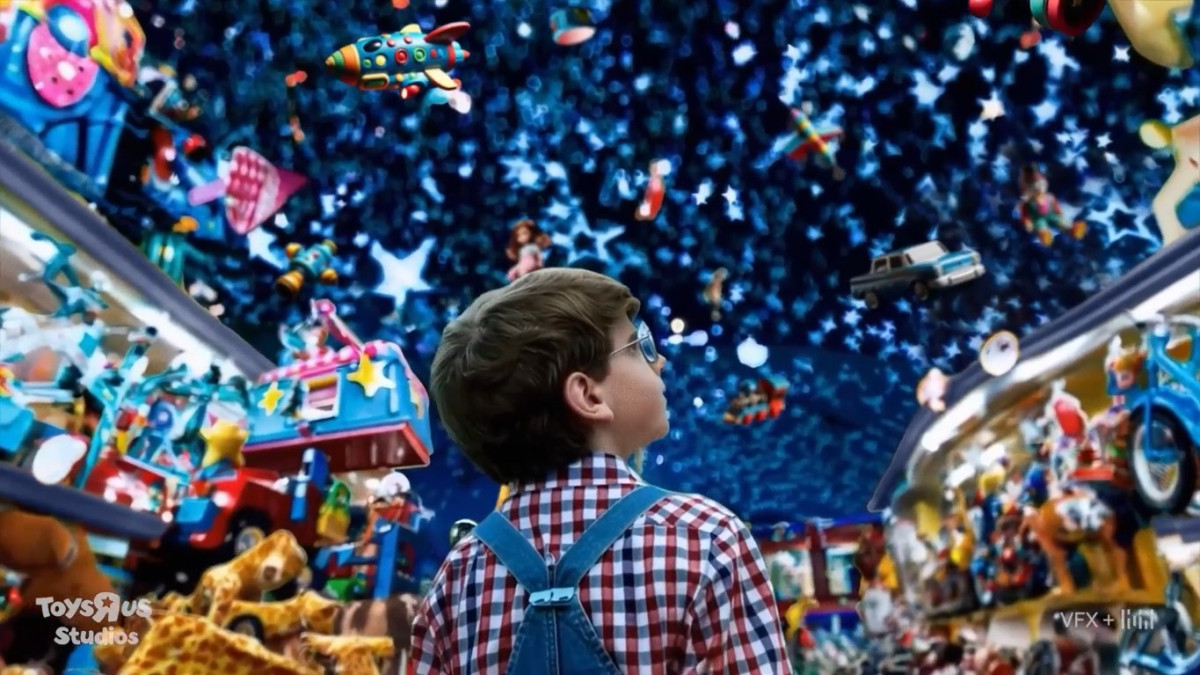
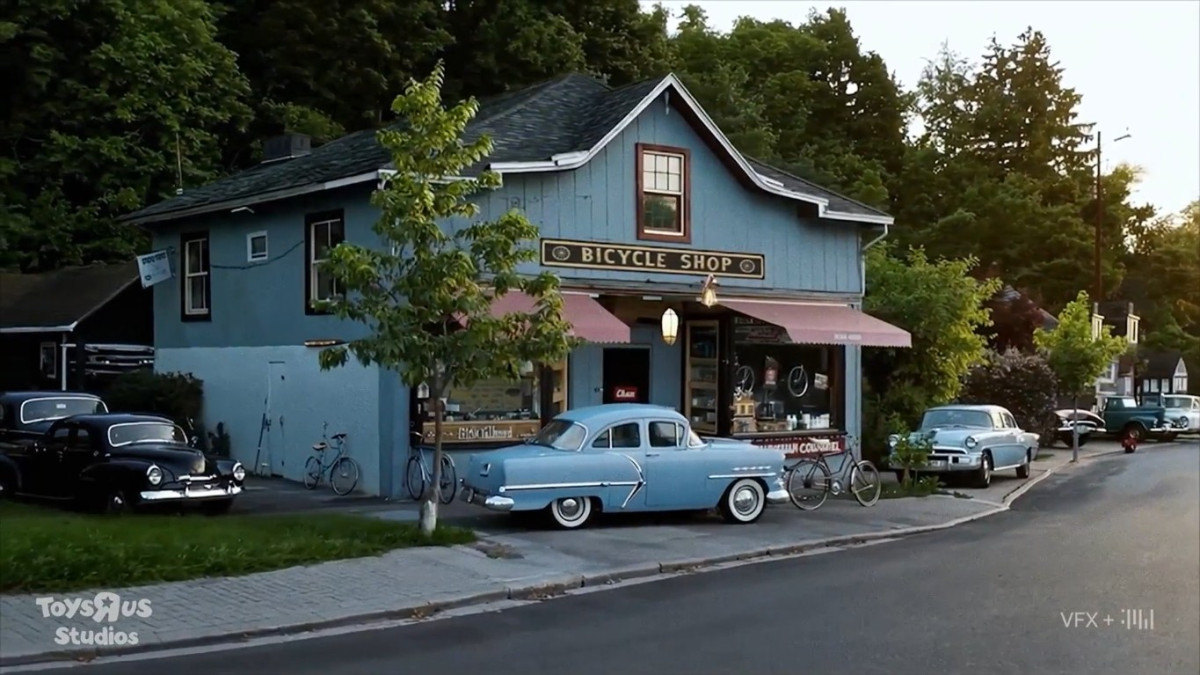
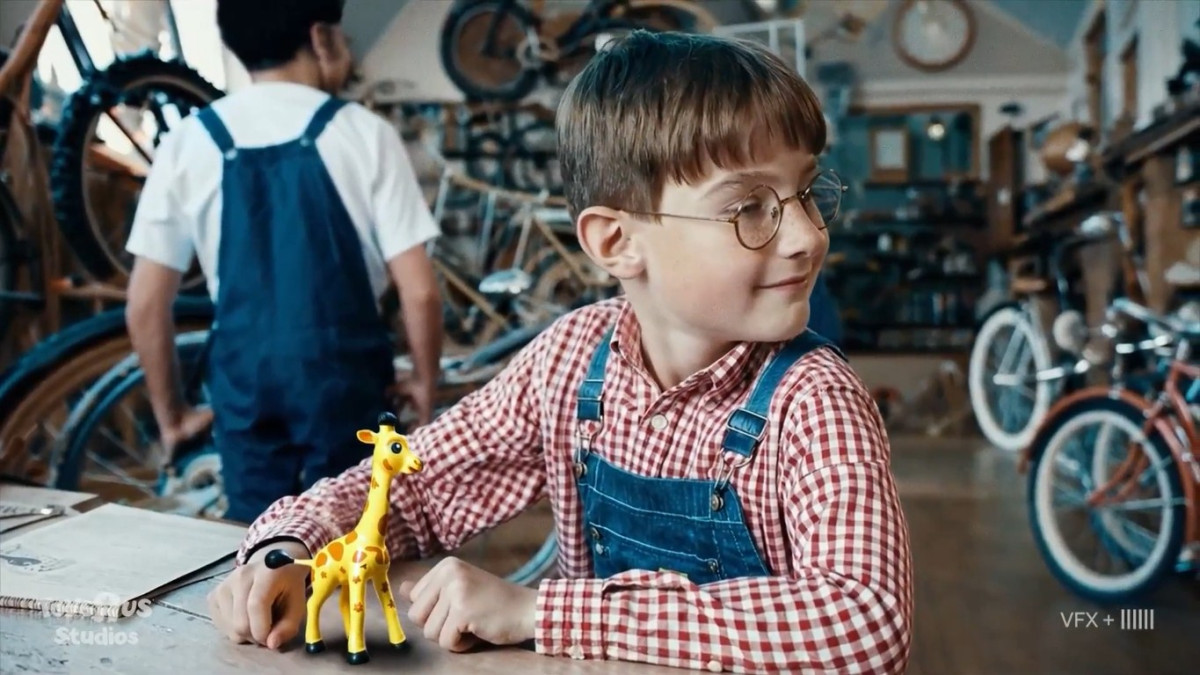

Frames from the Toys "R" Us commercial created using the Sora AI. The entire visual part was generated by AI, and only post-processing was done manually.
As AI takes on more and more tasks in creating texts and visuals, the value of human involvement will only increase. Live company blogs or real customer stories will stand out vividly against template AI materials.
The audience will begin to desire more depth and authenticity. Whatever technology exists, it cannot fully replace a human, their living unique experience, personal story, internal meanings, and emotions. At a business forum in Dubai last year, director Luc Besson noted that in his films, he shows heroes as he personally sees them, not someone else. And it is precisely this authorial perspective that grabs us in content and makes it special.
Impersonal AI content quickly becomes tiresome, so formats that show real emotions and expertise will become popular. These could be case studies, personal experience, employee stories, honest reviews, and practical insights.
The audience will quickly tire of uniform "perfectly smooth" texts. Only stories with specifics will work: cases, numbers, error analyses. AI will write instructions itself, but the story of a Dallas coffee shop that came up with a flashmob and made the news, or a company that found customers through a blog, will remain valuable.
One of the problems concerning the professional community is the loss of a unique brand voice. The AI content generator often writes standard, general texts, and even a good prompt does not always solve this problem.
We are confident that if a company relies completely on AI for content, it will soon face a total drop in audience engagement due to blandness and loss of unique voice. People sense falseness; they are not interested in similar posts on social networks and videos of the same format. A brand's content must feel sincere, and this always requires human involvement.
It is interesting how customers themselves perceive commercial texts and images created by AI. Research from 2025 shows: it does not matter much who created the ad—human or AI—if that ad evokes the desired emotions.
For example, if viewers did not know an image was created by artificial intelligence, their reaction did not differ from that to "human" content. But when the fact of AI generation was emphasized, especially with a poor result, the audience reacted with irritation.
This is confirmed by the Coca-Cola story, which has used AI in its famous Christmas ad for the second year in a row to reduce cost and speed up ad production. However, viewers are disappointed, and in 2025, the ad with Coca-Cola trucks again received a mass of negative feedback.

Example of how brands experiment with AI content: Coca-Cola's Christmas ad caused negative reactions from viewers.
Governments are beginning to actively regulate the commercial use of artificial intelligence. In Europe, the AI Act is already in force. This law requires mandatory labeling of content created by AI.
Additional obligations for users may also be introduced—for example, to label all AI-generated content.
Changes may also affect the sphere of copyright. AI will exacerbate the plagiarism problem, as with its help, others' content can be processed faster and on a larger scale.
Businesses often have the illusion: if a text is run through AI, it automatically becomes unique. In practice, this is not so. The rights holder of the original content can go to court and win the case. The material will have to be removed and compensation paid.
Additional obligations for users may also be introduced—for example, to label all AI-generated content.
Changes may also affect the sphere of copyright. AI will exacerbate the plagiarism problem, as with its help, others' content can be processed faster and on a larger scale.
Businesses often have the illusion: if a text is run through AI, it automatically becomes unique. In practice, this is not so. The rights holder of the original content can go to court and win the case. The material will have to be removed and compensation paid.
In many companies, AI has already become a common tool for routine tasks with constantly expanding functionality. Let's briefly summarize what we can expect next.
Costs for producing all types of content will decrease.
AI will be used in practically every company for routine tasks, and people will focus on creativity and strategies.
Large companies will implement AI agents for the full content work cycle.
Libraries of digital avatars will allow creating content for any audience segments.
Demand for live content with human experience and emotions will grow.
Businesses will opt for universal specialists who can work with AI as a strategist.
Governments will introduce mandatory labeling of AI content and make changes to copyright law.
Content marketing is changing faster today than ever before. Therefore, a strategic approach, systematicity, and the ability to create truly valuable content are becoming key competitive advantages.